Stretches for Warming Up in Fitness Routines
Best stretches for warming up in fitness routines – Before diving into a workout, it is crucial to warm up your muscles properly. Warming up helps increase blood flow to the muscles, loosen joints, and prepare the body for exercise, reducing the risk of injury.
There are two main types of stretches used in warming up: dynamic stretches and static stretches. Dynamic stretches involve continuous movement through a full range of motion, while static stretches involve holding a stretch position for a period of time.
Dynamic Stretches for Warming Up
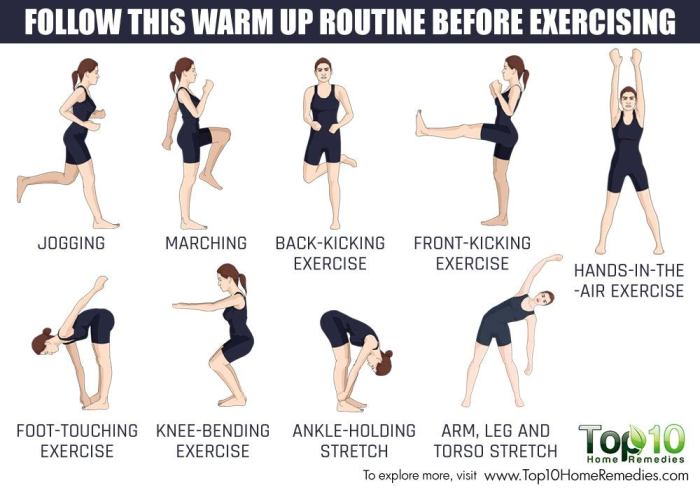
- Leg swings: Stand upright and swing one leg forward and backward in a controlled motion, alternating legs.
- Arm circles: Extend your arms out to the sides and make circular motions with your arms, gradually increasing the size of the circles.
- High knees: Lift your knees towards your chest while jogging in place, focusing on driving the knees up high.
Dynamic stretches are ideal for warming up as they help improve flexibility, increase blood flow, and activate the muscles in preparation for exercise.
Duration and Frequency of Stretches
When incorporating stretches into your warm-up routine, aim for 5-10 minutes of dynamic stretches before starting your workout. It is recommended to perform dynamic stretches at least 5-10 times for each exercise, focusing on smooth and controlled movements.
Stress Management
Stretching plays a crucial role in stress management as it helps release tension accumulated in the muscles and promotes relaxation. When incorporated into a fitness routine, stretching can be a powerful tool for reducing stress levels and improving overall well-being.
Connection Between Physical Activity, Stretching, and Stress Reduction, Best stretches for warming up in fitness routines
- Physical activity, such as stretching, triggers the release of endorphins, also known as the “feel-good” hormones, which help combat stress and promote a sense of happiness.
- Stretching helps improve blood circulation, delivering essential nutrients and oxygen to the muscles, which can aid in stress reduction by promoting a sense of relaxation.
- Engaging in a regular stretching routine can help alleviate muscle tension, which is often a physical manifestation of stress, leading to a more relaxed state of mind.
Specific Stretches for Releasing Tension and Stress
- Neck Stretch: Gently tilt your head from side to side, holding each position for a few seconds to release tension in the neck and shoulders.
- Child’s Pose: Sit back on your heels with arms stretched out in front of you to stretch the back, shoulders, and hips, promoting relaxation.
- Seated Forward Fold: Sit on the floor with legs extended and reach towards your toes to stretch the hamstrings and lower back, relieving stress and tension.
Combining Breathing Techniques with Stretching for Stress Relief
- Before starting a stretching routine, take a few deep breaths to center yourself and focus on the present moment, enhancing the mind-body connection.
- During each stretch, remember to breathe deeply and slowly, allowing the breath to guide your movements and help release tension in the body.
- Practice mindfulness by staying present and aware of your breath and body sensations while stretching, which can enhance the stress-relieving benefits of the routine.
Healthy Lifestyle
Stretching as part of a fitness routine plays a crucial role in promoting a healthy lifestyle by improving flexibility, posture, and reducing the risk of injuries.
Flexibility and Overall Health
Flexibility is essential for overall health and fitness as it allows for a greater range of motion in joints, muscles, and tendons. By incorporating stretches into your routine, you can improve flexibility, which can help prevent muscle imbalances and reduce the likelihood of injuries.
Improved Posture and Injury Prevention
- Hamstring Stretch: This stretch targets the muscles in the back of the thighs, promoting better posture by reducing tightness in the lower back and hips.
- Chest Opener Stretch: By opening up the chest and shoulders, this stretch can improve posture and prevent shoulder injuries.
- Quad Stretch: Stretching the quadriceps can help alleviate knee pain and improve overall lower body alignment, leading to better posture.
Promoting Overall Well-being and Vitality
Regular stretching not only improves physical health but also contributes to mental well-being by reducing stress and tension in the body. It can help increase circulation, boost energy levels, and promote a sense of relaxation and vitality.
Medical Innovations
As technology continues to advance, the field of stretching techniques for warm-ups has seen significant innovations in recent years. These innovations have not only enhanced the effectiveness of stretching routines but have also revolutionized the way we approach stretching in fitness routines.
Use of Technology in Stretching Routines
- Many fitness apps and wearable devices now offer personalized stretching routines based on individual needs and goals.
- Virtual reality technology is being utilized to create immersive stretching experiences, making it more engaging and motivating for users.
- Sensors embedded in workout equipment can provide real-time feedback on stretching form and technique, helping users optimize their routines.
- Artificial intelligence is being used to analyze data from stretching sessions and provide insights on improving flexibility and preventing injuries.
Advancements in Stretching Equipment
- Foam rollers with added features such as vibration therapy and heat therapy are becoming popular for enhancing the effectiveness of stretching exercises.
- Elastic resistance bands with adjustable resistance levels allow users to progress in their stretching routines and target specific muscle groups more effectively.
- Innovative stretching machines like the PNF stretching devices provide a controlled and precise way to perform advanced stretching techniques.
Impact of Medical Research on Stretching Protocols
- Recent studies have shown that dynamic stretching, incorporating movement into stretches, can be more beneficial for warm-ups than static stretching alone.
- Research on proprioceptive neuromuscular facilitation (PNF) stretching has led to the development of new protocols that improve flexibility and range of motion in a shorter amount of time.
- Medical research has emphasized the importance of individualized stretching routines based on factors like age, fitness level, and injury history for optimal results.
Nutritional Supplements
Proper nutrition plays a crucial role in supporting stretching and warm-up routines by providing the necessary energy and nutrients for optimal performance and muscle function.
Supplements for Flexibility and Performance
- Omega-3 fatty acids: Help reduce inflammation and improve joint flexibility.
- Glucosamine and chondroitin: Support joint health and reduce stiffness.
- Vitamin D: Essential for muscle function and strength.
Timing Nutrition Intake with Stretching Exercises
It is important to consume a balanced meal or snack containing carbohydrates, protein, and healthy fats at least 1-2 hours before stretching exercises to provide sustained energy. Additionally, hydrating adequately before and after workouts is essential for optimal performance and muscle function.
Foods and Supplements for Muscle Recovery
- Protein shakes or bars: Provide essential amino acids for muscle repair and growth.
- Turmeric: Known for its anti-inflammatory properties to reduce muscle soreness.
- Tart cherry juice: Helps reduce muscle damage and inflammation post-exercise.
Fitness Routine
Stretching plays a crucial role in an effective fitness routine as it helps prepare the muscles for activity and prevent injuries. In this section, we will explore how stretching fits into an overall fitness routine, the benefits of incorporating stretching before and after different types of workouts, a sample warm-up routine with stretches for various muscle groups, and the importance of balance and variety in a fitness routine for optimal results.
Incorporating Stretching into a Fitness Routine
Stretching should be an essential component of any fitness routine as it helps improve flexibility, range of motion, and overall performance. By incorporating stretching before and after workouts, individuals can experience the following benefits:
- Enhanced flexibility: Stretching helps elongate the muscles and improve flexibility, which can lead to better posture and reduced risk of injury during exercise.
- Improved circulation: Stretching helps increase blood flow to the muscles, promoting better circulation and nutrient delivery.
- Reduced muscle soreness: Stretching after a workout can help reduce muscle soreness and improve recovery time.
Sample Warm-Up Routine with Stretches
Here is a sample warm-up routine that includes stretches for various muscle groups:
- Neck stretch: Gently tilt your head from side to side to stretch the neck muscles.
- Shoulder rolls: Roll your shoulders forward and backward to loosen up the shoulder muscles.
- Quad stretch: Standing on one leg, pull your other foot towards your glutes to stretch the quadriceps.
- Hamstring stretch: Sit on the floor with one leg extended and the other bent, reach towards your toes to stretch the hamstrings.
- Calf stretch: Stand facing a wall, place one foot behind you with the heel on the ground, and lean forward to stretch the calf muscles.
Importance of Balance and Variety in a Fitness Routine
Incorporating a variety of exercises and activities into a fitness routine is essential for optimal results. By including cardio, strength training, flexibility exercises, and rest days, individuals can achieve a well-rounded fitness program that promotes overall health and wellness. Balance is key to preventing overuse injuries and ensuring that all muscle groups are adequately trained for improved performance.
Health Screenings
Regular stretching plays a crucial role in improving flexibility and overall health. By incorporating stretching into a fitness routine, individuals can positively impact their health screening results and potentially prevent certain musculoskeletal conditions. Let’s delve deeper into how flexibility can contribute to better health screenings and early detection of health issues.
Role of Flexibility in Preventing Musculoskeletal Conditions
Regular stretching helps to maintain and improve flexibility, which is essential for preventing musculoskeletal conditions such as muscle strains, ligament sprains, and joint stiffness. Flexibility allows the body to move more freely and efficiently, reducing the risk of injuries during physical activities.
Impact of Stretching on Health Screening Results
Incorporating stretching into a fitness routine can have a positive impact on health screening results by improving flexibility, range of motion, and overall physical performance. Enhanced flexibility can lead to better posture, reduced muscle tension, and improved balance, all of which contribute to better health outcomes during screenings.
Early Detection and Prevention of Health Issues
Stretching regularly can aid in the early detection and prevention of certain health issues by promoting blood circulation, reducing inflammation, and enhancing joint mobility. Improved flexibility can also help in identifying muscular imbalances or weaknesses that may lead to more serious health concerns if left unaddressed.
Disease Prevention: Best Stretches For Warming Up In Fitness Routines
Stretching and warm-up routines play a crucial role in disease prevention by improving overall physical health and flexibility. These routines can help reduce the risk of certain diseases and conditions, making them an essential part of any fitness regimen.
Correlation between Physical Activity and Disease Prevention
Regular physical activity, including stretching and warm-up exercises, is linked to a lower risk of chronic diseases such as heart disease, diabetes, and obesity. By incorporating these routines into your fitness regimen, you can improve circulation, maintain a healthy weight, and enhance your overall well-being.
- Stretching helps improve flexibility, which can reduce the risk of injuries and joint problems in the long run.
- Warm-up exercises prepare the muscles and joints for more intense physical activity, preventing strains and sprains.
- By promoting better circulation and oxygen flow, stretching can contribute to a healthier cardiovascular system and lower the risk of heart disease.
Specific Stretches for Disease Prevention
Certain stretches target areas prone to issues related to specific diseases. For example, stretches that focus on the lower back can help prevent back pain and improve posture, reducing the risk of musculoskeletal disorders. Stretching the hamstrings and calves can also prevent injuries and conditions like plantar fasciitis.
- Child’s Pose: This stretch targets the lower back and hips, promoting spine flexibility and reducing the risk of back pain.
- Calf Stretch: Stretching the calves can prevent tightness and reduce the risk of Achilles tendon injuries.
- Hamstring Stretch: By improving hamstring flexibility, this stretch can prevent strains and muscle imbalances.
Overall Disease Prevention Strategies with Stretching
Incorporating stretching into your daily routine can contribute to overall disease prevention strategies by enhancing flexibility, reducing the risk of injuries, and promoting better circulation. By combining stretching with regular physical activity and a balanced diet, you can improve your overall health and well-being, lowering the risk of various diseases and conditions.
Sleep Hygiene
Improving sleep quality is essential for overall health and well-being. One way to enhance sleep hygiene is by incorporating stretching into your daily routine.
Connection Between Stretching, Physical Activity, and Improved Sleep Quality
Regular physical activity, including stretching exercises, has been linked to better sleep quality. Engaging in stretching can help relax the body and mind, reducing stress and promoting a more restful sleep.
Incorporating Stretching into Bedtime Routine
- Performing gentle stretches before bedtime can signal to your body that it’s time to wind down and prepare for sleep.
- Focus on stretches that target major muscle groups, such as the hamstrings, back, and shoulders, to release tension accumulated throughout the day.
Examples of Relaxing Stretches for Better Sleep
- Child’s Pose: Kneel on the floor, then sit back on your heels and reach your arms forward, resting your forehead on the ground.
- Seated Forward Fold: Sit on the floor with your legs extended in front of you, then gently hinge at the hips to reach towards your toes.
- Supine Spinal Twist: Lie on your back, bend your knees, and lower them to one side while keeping your shoulders grounded.
Impact of Stretching on Sleep Hygiene
By incorporating stretching into your bedtime routine, you can help release tension, improve flexibility, and promote relaxation, all of which contribute to better sleep hygiene. This can lead to more restorative sleep and a refreshed feeling upon waking.
Mental Clarity
Stretching as part of a fitness routine plays a crucial role in enhancing mental clarity. When we engage in stretching exercises, we not only loosen up our muscles but also improve blood circulation throughout the body, including the brain. This increased blood flow delivers more oxygen and nutrients to the brain, promoting better cognitive function and mental focus.
Benefits of Increased Blood Flow to the Brain
- Improved focus and concentration
- Enhanced memory retention
- Boost in overall cognitive function
Specific Stretches for Mental Clarity
- Forward Fold: This stretch helps release tension in the spine and neck, promoting relaxation and mental clarity.
- Seated Spinal Twist: By twisting the spine, this stretch stimulates blood flow to the brain and enhances focus.
- Child’s Pose: A calming stretch that reduces stress and anxiety, clearing the mind for improved mental clarity.
Connection Between Physical Well-being and Mental Clarity
Engaging in regular physical activity, such as stretching exercises, not only benefits our physical health but also has a profound impact on our mental well-being. When our body feels good, our mind follows suit, leading to increased mental clarity, sharper focus, and better overall cognitive function.
Hydration Importance
Proper hydration is crucial for optimal performance during stretching routines. Whether you are warming up, working out, or cooling down, staying hydrated is essential for overall fitness and well-being.
Staying Hydrated Before, During, and After Stretching
- Adequate hydration before stretching helps prepare your muscles and joints for movement, reducing the risk of injury.
- During stretching, maintaining hydration levels helps improve flexibility and range of motion, allowing for deeper stretches.
- After stretching, hydrating helps replenish fluids lost through sweat and aids in muscle recovery.
Impact of Hydration Levels on Stretching Effectiveness
- Dehydration can lead to muscle cramps, decreased flexibility, and reduced performance during stretches.
- Optimal hydration levels support proper blood flow and nutrient delivery to muscles, enhancing the effectiveness of stretching routines.
Tips for Maintaining Optimal Hydration
- Drink water throughout the day to stay hydrated, not just during workouts.
- Monitor your urine color – pale yellow indicates proper hydration.
- Include hydrating foods like fruits and vegetables in your diet.
- Avoid excessive caffeine and alcohol consumption, as they can dehydrate the body.
Examples of Hydrating Beverages and Their Benefits
| Beverage | Benefits |
|---|---|
| Water | Hydrates the body, supports muscle function, and aids in digestion. |
| Coconut Water | Rich in electrolytes, helps replenish minerals lost during sweating. |
| Sports Drinks | Provide electrolytes and carbohydrates for energy and hydration during intense workouts. |
| Green Tea | Contains antioxidants and hydrates the body without added sugars or calories. |
FAQs
How long should I hold a stretch during warm-up?
It’s recommended to hold dynamic stretches for 10-15 seconds and static stretches for 30 seconds to 2 minutes for an effective warm-up.
Is it better to stretch before or after a workout?
It’s beneficial to do both. Pre-workout stretching prepares your muscles, while post-workout stretching aids in recovery and flexibility.
Can stretching help with stress management?
Absolutely. Incorporating stretching into your fitness routine can release tension and promote relaxation, contributing to stress management.


More Stories