Stress Management
Stress can significantly impact the quality of sleep a person gets. When individuals are stressed, their bodies produce more cortisol, a stress hormone that can interfere with the natural sleep-wake cycle. This can lead to difficulty falling asleep, staying asleep, or achieving restorative sleep.
Effective stress management techniques play a crucial role in improving sleep hygiene. By reducing stress levels, individuals can create a more conducive environment for quality sleep. Engaging in stress-relief activities can help relax the mind and body, making it easier to unwind and prepare for a restful night’s sleep.
Different Stress-Relief Methods
- Exercise: Physical activity can help release endorphins, which are natural mood lifters that can reduce stress and anxiety, ultimately promoting better sleep.
- Mindfulness and Meditation: Practices like mindfulness and meditation can help calm the mind, reduce racing thoughts, and promote relaxation, leading to improved sleep quality.
- Deep Breathing Techniques: Deep breathing exercises can help activate the body’s relaxation response, lowering heart rate and blood pressure, and easing stress to facilitate better sleep.
- Yoga: Practicing yoga combines physical movement, breathwork, and mindfulness, making it an effective stress-relief method that can enhance sleep efficiency.
- Journaling: Writing down thoughts and feelings before bed can help declutter the mind, alleviate worries, and improve relaxation, creating a more peaceful state for sleep.
Healthy Lifestyle
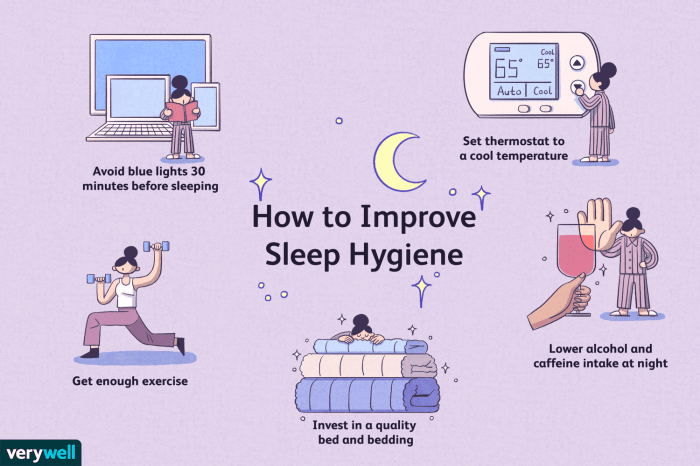
Sleep hygiene techniques for improving sleep efficiency – Having a healthy lifestyle is closely linked to the quality of sleep one receives. The habits and routines we adopt during the day can significantly impact our ability to get a restful night’s sleep.
Examples of Healthy Habits
- Avoiding caffeine and heavy meals close to bedtime
- Incorporating regular exercise into your daily routine
- Creating a calming bedtime routine to signal to your body that it’s time to sleep
- Limiting screen time before bed to reduce exposure to blue light
Importance of Consistent Sleep Schedule
A consistent sleep schedule is crucial for maintaining a healthy lifestyle as it regulates your body’s internal clock, known as the circadian rhythm. Going to bed and waking up at the same time every day helps establish a routine that optimizes the quality of your sleep.
Medical Innovations
Medical innovations have played a crucial role in improving sleep hygiene by introducing advanced technologies and treatments to enhance sleep efficiency. These innovations have revolutionized the way sleep disorders are diagnosed and managed, ultimately leading to better overall sleep quality for individuals.
Advancements in Sleep Technology
The field of sleep technology has seen remarkable advancements in recent years, with the development of innovative devices and tools aimed at improving sleep quality. One such example is the introduction of wearable sleep trackers that monitor sleep patterns, providing valuable data to analyze and optimize sleep routines. These devices offer insights into factors such as sleep duration, sleep stages, and disturbances during the night, helping individuals make informed decisions to improve their sleep hygiene.
Another significant advancement is the use of smart beds and mattresses equipped with sensors that adjust firmness and support levels based on an individual’s sleep position and movements. These adaptive technologies ensure optimal comfort and alignment during sleep, promoting restful and uninterrupted rest.
Role of Medical Professionals
Medical professionals, including sleep specialists and healthcare providers, play a crucial role in recommending innovative solutions for sleep disorders. By staying updated on the latest advancements in sleep technology and treatment options, medical professionals can offer personalized recommendations based on individual needs and preferences. From prescribing advanced sleep medications to suggesting lifestyle modifications and behavioral therapies, healthcare providers work closely with patients to address sleep issues effectively.
Overall, medical innovations continue to drive improvements in sleep hygiene, offering cutting-edge solutions to enhance sleep quality and overall well-being.
Nutritional Supplements
When it comes to improving sleep quality, incorporating certain nutritional supplements into your routine can be beneficial. These supplements can help support your overall sleep health and potentially enhance your sleep patterns.
Key Nutritional Supplements for Sleep Quality
There are several key nutritional supplements that have been linked to improving sleep quality:
- Melatonin: A natural hormone that regulates sleep-wake cycles and can be helpful for those with insomnia or jet lag.
- Magnesium: Known for its relaxation properties, magnesium can help calm the body and mind before bedtime.
- L-Theanine: Found in tea leaves, this amino acid promotes relaxation and can improve sleep quality.
Positive Influence of Supplements on Sleep Patterns
These supplements can positively influence sleep patterns by:
- Regulating sleep-wake cycles
- Promoting relaxation and reducing anxiety
- Enhancing overall sleep quality and duration
Consulting a Healthcare Provider
Before incorporating any supplements into your sleep hygiene routine, it is important to consult a healthcare provider. They can provide guidance on the appropriate dosage, potential interactions with other medications, and ensure that the supplements are safe for your individual health needs.
Fitness Routine
Regular exercise is crucial for maintaining good overall health, including promoting better sleep quality. Engaging in physical activities can help reduce stress levels, anxiety, and depression, which are common factors that contribute to sleep disturbances. Additionally, exercise can regulate the body’s internal clock and promote a deeper and more restful sleep.
Relationship between Exercise and Quality of Sleep
Regular physical activity has been shown to improve the quality of sleep by increasing the time spent in deep sleep stages. Exercise can also help in falling asleep faster and experiencing fewer awakenings during the night. Moreover, it can enhance the overall duration of sleep, leading to a more refreshing and energized feeling upon waking up.
Examples of Fitness Routines for Better Sleep Efficiency
- Cardiovascular exercises such as running, cycling, or swimming can help in releasing endorphins, which can reduce stress and improve sleep quality.
- Strength training exercises like weightlifting or bodyweight exercises can increase muscle mass and improve overall physical health, leading to better sleep patterns.
- Yoga and stretching routines can help in relaxing the body and mind, promoting a calm state before bedtime and improving sleep quality.
Optimal Timing of Exercise for Enhancing Sleep Hygiene
Engaging in physical activity at least 3-4 hours before bedtime is recommended to allow the body to cool down and relax before sleep. Exercising too close to bedtime may lead to increased alertness and difficulty falling asleep. However, some individuals may find gentle stretching or yoga exercises right before bed beneficial for promoting relaxation and sleep readiness.
Health Screenings
Health screenings play a crucial role in identifying sleep-related issues and ensuring overall well-being.
Types of Screenings for Sleep Disorders
- Polysomnography: A comprehensive sleep study that monitors various body functions during sleep, including brain waves, heart rate, and breathing patterns.
- Multiple Sleep Latency Test (MSLT): Measures how quickly an individual falls asleep during the day, helping diagnose conditions like narcolepsy.
- Actigraphy: Utilizes a wrist-worn device to track sleep patterns and assess sleep quality over time.
Importance of Regular Health Screenings
Regular health screenings not only aid in the early detection of sleep disorders but also contribute to maintaining good sleep hygiene and overall health. By identifying underlying issues early on, individuals can receive appropriate treatment and improve their quality of sleep.
Disease Prevention
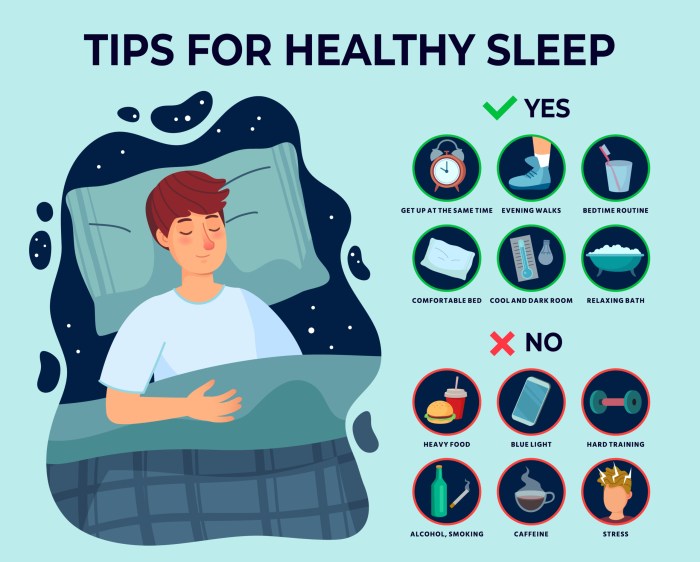
Good sleep hygiene plays a crucial role in disease prevention by supporting overall health and wellness. Adequate and quality sleep is essential for the body to repair, regenerate, and strengthen its defenses against various illnesses.
Practicing good sleep hygiene can contribute to disease prevention by reducing the risk of developing chronic conditions and maintaining a strong immune system. Poor sleep quality has been linked to an increased susceptibility to a variety of diseases, including:
Examples of Diseases Linked to Poor Sleep Quality, Sleep hygiene techniques for improving sleep efficiency
- Cardiovascular diseases, such as heart disease and hypertension
- Metabolic disorders, like diabetes and obesity
- Immune system dysfunction, leading to frequent infections
- Mental health issues, including depression and anxiety disorders
Adequate sleep is essential for the body to regulate immune function effectively. During sleep, the body produces cytokines, a type of protein that helps fight inflammation and infection. Insufficient sleep can disrupt this process, weakening the immune system and making individuals more susceptible to illnesses.
By prioritizing good sleep hygiene practices, individuals can significantly reduce their risk of developing various diseases and enhance their overall health and well-being.
Sleep Hygiene
Sleep hygiene refers to a set of practices and habits that are necessary for a good night’s sleep. By following these practices, individuals can improve their sleep efficiency, overall sleep quality, and daytime alertness.
Key Sleep Hygiene Practices
- Avoiding caffeine, nicotine, and alcohol close to bedtime to prevent disruptions in sleep patterns.
- Establishing a consistent sleep schedule by going to bed and waking up at the same time every day, even on weekends.
- Creating a relaxing bedtime routine to signal to the body that it’s time to wind down, such as reading a book or taking a warm bath.
- Keeping the bedroom dark, quiet, and cool to promote a comfortable sleep environment.
- Avoiding screens such as phones, tablets, and computers before bedtime, as the blue light can interfere with the production of melatonin, a hormone that regulates sleep.
Tips for Creating a Conducive Sleep Environment
- Invest in a comfortable mattress and pillows that support good sleep posture.
- Use blackout curtains or an eye mask to block out light and create a dark sleeping environment.
- Keep the bedroom quiet by using earplugs or a white noise machine to mask disruptive sounds.
- Avoid eating heavy meals close to bedtime to prevent indigestion and discomfort while trying to sleep.
- Consider using aromatherapy with calming scents like lavender to promote relaxation and improve sleep quality.
Mental Clarity
When it comes to mental clarity, the quality of sleep plays a crucial role in determining our cognitive function and overall mental well-being. Adequate sleep is essential for optimal brain function and emotional regulation.
Relationship between Sleep Quality and Mental Clarity
- Quality sleep allows the brain to rest and recharge, enhancing cognitive abilities such as memory, focus, and decision-making.
- During deep sleep stages, the brain processes information gathered throughout the day, promoting mental clarity and problem-solving skills.
- Improving sleep hygiene can lead to reduced brain fog, improved concentration, and better overall mental performance.
Contributions of Sufficient Sleep to Cognitive Function
- Sleep deprivation has been linked to impaired cognitive function, including decreased attention span and slower reaction times.
- A well-rested brain is better equipped to handle complex tasks, learn new information, and retain knowledge effectively.
- Consistent, restful sleep supports mental clarity by allowing the brain to consolidate memories and process emotions, leading to improved problem-solving abilities.
Techniques for Achieving Mental Clarity through Improved Sleep Hygiene
- Establish a consistent sleep schedule by going to bed and waking up at the same time every day, even on weekends.
- Create a relaxing bedtime routine to signal to your body that it’s time to wind down and prepare for sleep.
- Avoid stimulants like caffeine and electronics before bedtime to promote relaxation and better sleep quality.
- Ensure your sleep environment is conducive to rest, with a comfortable mattress, cool room temperature, and minimal noise and light disturbances.
Hydration Importance: Sleep Hygiene Techniques For Improving Sleep Efficiency
Hydration plays a crucial role in maintaining overall health, including sleep quality. Dehydration can lead to various disruptions in the body, affecting the sleep-wake cycle and overall sleep patterns.
Impact of Hydration on Sleep Quality
Staying hydrated is essential for regulating body temperature and promoting relaxation, both of which are vital for a restful night’s sleep. Dehydration can cause discomfort and restlessness, making it harder to fall and stay asleep.
Maintaining Adequate Hydration Levels
- Drink plenty of water throughout the day, especially during and after exercise.
- Avoid excessive consumption of caffeinated and alcoholic beverages, as they can dehydrate the body.
- Include hydrating foods in your diet, such as fruits and vegetables with high water content.
- Carry a water bottle with you to remind yourself to drink water regularly.
FAQ Summary
How do stress management techniques improve sleep hygiene?
Stress management techniques can reduce anxiety levels, promote relaxation, and create a conducive environment for better sleep quality.
What are the key sleep hygiene practices for improving sleep efficiency?
Key practices include maintaining a consistent sleep schedule, creating a comfortable sleep environment, and avoiding stimulants before bedtime.
How does exercise impact the quality of sleep?
Regular exercise can promote deeper sleep, reduce insomnia symptoms, and contribute to overall sleep efficiency.
Why is hydration important for sleep quality?
Staying hydrated helps regulate body temperature, aids in relaxation, and can prevent disturbances during sleep.


More Stories
Hydration and its role in reducing fatigue – Stay Refreshed, Stay Energized!
Hydration and its relationship to heart health: The Key to a Healthy Heart
Disease prevention through smoking cessation programs: A Path to Healthier Living